ADHD time blindness: making time visible enough to use
· 5 min read

Time blindness is the gap between knowing that time exists and feeling it pass. With ADHD, the knowing is usually fine — it is the feeling that fails. An hour registers as ten minutes, a deadline stays comfortably abstract until it is suddenly on top of you, and “I’ll leave in five minutes” turns out to have been said forty minutes ago. The response that works for many people is not trying harder to sense time. It is externalising it — turning time from a private feeling into a public object you can look at.
The clock in your head is an instrument, not a fact
Most people carry a rough internal timer. It is what lets them surface from a task with a suspicion that lunch is near, or say “that meeting felt like an hour” and be roughly right. Nobody’s version is precise, but for most people it is calibrated well enough to steer by.
With ADHD it often is not. Time tends to arrive in two settings — now and not now — and everything filed under “not now” sits at the same distance, whether it is due tomorrow or in June. A deadline three weeks away and a deadline three months away generate the same amount of urgency, which is to say none, right up until they cross into now and generate all of it at once.
This is not a character flaw, any more than short-sightedness is. It is an instrument that reads wrong. And the sensible response to an instrument that reads wrong is not to squint harder at it — it is to stop flying by it.
Why “just check the clock” doesn’t help
The standard advice is to look at the clock more often, and it fails for a simple reason: a clock answers the wrong question. It tells you what time it is, and time blindness was never about that. The question you need answered is how long have I been here, and how much is left — duration, not position. Reading 14:42 off the wall means nothing unless you remember when you started, do the subtraction, and hold the result somewhere it won’t evaporate. That machinery is precisely the part that is unreliable.
There is a second problem. Checking the clock requires remembering that the clock exists while you are inside a task — and being inside a task is exactly when time-blind hours go missing. Advice that depends on the broken faculty to repair the broken faculty is not really advice. It is the same instruction as “feel time better”, wearing a hat.
Time has to become an object
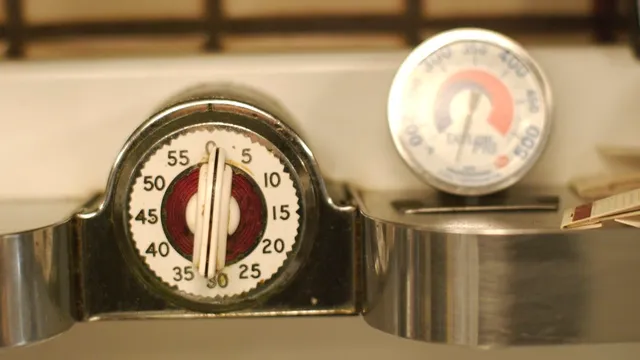
What does help is representation you never have to compute. An hourglass is the ancient version: duration made into sand, readable at a glance, no arithmetic required. Half the sand gone means half the time gone, and you know it the way you know a glass is half empty — by looking, not by working it out.
A visible countdown is the modern equivalent. A number falling towards zero is duration made literal; you don’t estimate what’s left, you read it. The difference between 18:44 remaining and a wall clock is the difference between a fuel gauge and a map — one of them tells you the thing you actually need to know, without asking you to derive it.
This is one instance of a much broader move: taking work your internal machinery does badly and handing it to external machinery that does it perfectly, every time, without being asked. That move deserves its own discussion — borrowing structure when your own is unreliable — because it applies to far more than clocks.
Fixed blocks give the countdown something to count
A countdown needs an end to count towards, which is why time blindness and the Pomodoro Technique fit each other so well. The technique is, at heart, this whole argument in method form: chop the day into fixed blocks, make each block’s remaining time visible, and mark the end with a sound you cannot miss.
The bell matters as much as the countdown. Edges you can hear don’t need to be noticed — they arrive on their own, from outside, and they arrive whether or not you were paying attention. For someone whose sense of elapsed time cuts out under load, an edge that announces itself is worth a dozen edges you were supposed to check for.
Whether the technique as a whole suits ADHD is a fair question with an honest, mixed answer — many people find it fits unusually well, some find the standard intervals all wrong — and it is worth reading the full case before deciding.
A state you can read is easier than a number
Numbers help; states are easier still. A number must be read and interpreted. A state is simply seen.
This is the quiet reason a creature makes a good clock. In PetPomo, the countdown comes with a cat: press start and it curls up and goes to sleep; when the session ends, it wakes. That gives you time as a state — cat asleep means the block is still running, cat awake means it is over — legible from across the room, in your peripheral vision, without parsing anything. It is the hourglass principle again, wearing fur.
The same design keeps the clock from becoming the distraction. A sleeping cat is deliberately boring. It changes state exactly when the information changes, and does nothing in between — which is all you want from an instrument you’ll be sitting next to for half an hour.
The research behind the metaphor
“An instrument that reads wrong” is a metaphor, but the mismeasurement it points at is one of the better-documented findings in the ADHD literature:
| Finding | Key numbers | Source |
|---|---|---|
| Timing deficits in ADHD appear across duration estimation, reproduction and discrimination tasks | Review of neurocognitive and neuroimaging studies, children and adults | Noreika et al., Neuropsychologia (2013) |
| The time-perception gap has direct clinical consequences — missed deadlines, chronic lateness, misjudged task lengths | Review of time-perception studies and their day-to-day implications | Ptacek et al., Medical Science Monitor (2019) |
| The population affected is large | ~7.2% of children and ~2.5% of adults meet ADHD criteria | Thomas et al., Pediatrics (2015); Simon et al., British Journal of Psychiatry (2009) |
Note what the research does not say: it does not say practice fixes it. Which is the argument for externalising time rather than training the sense — and the argument of the next section.
You don’t fix the sense; you furnish the room
Nobody practises their way into a normal time-sense, and the attempt mostly produces guilt. What you can do is build a room where time is lying about in visible pieces: a countdown you can glance at, a bell that ends things without your help, a creature whose posture tells you which side of the edge you’re on. None of this makes you feel time. It makes feeling time unnecessary — which, for getting through an afternoon, turns out to be just as good.
PetPomo is a timer, not a treatment. Nothing here is medical advice — if focus problems are weighing on you, a doctor or a specialist is the right person to talk to, and this page is no substitute.
Comments
Loading comments…
Keep reading 🐾

External structure: borrowing a clock when yours is unreliable
External structure for ADHD means outsourcing time-sense to alarms, visible timers and other people — prosthetics, not crutches, and nothing to apologise for.
ADHD and the 25-minute timer: why one length doesn't fit every brain
25 minutes is a convention, not a rule. Why ADHD brains often need a different session length, and how to actually find yours.

The two-minute rule before your first pomodoro
The hardest part of a 25-minute session is the first ten seconds. A smaller rule to get past the moment before you press Start.