One task per session: the rule that makes pomodoro work
· 4 min read
One task per session is the rule that makes the Pomodoro Technique work — not the tomato, not the twenty-five minutes, but the discipline of naming a single piece of work before you press start and letting the timer belong to that and nothing else. Most pomodoros that fail were carrying three tasks when they left the ground.
A session with three tasks is a to-do list with a countdown
The failure looks innocent. You sit down and think: I’ll use this session to answer those emails, fix that bug and make a start on the slides. The bell rings twenty-five minutes later and all three have been touched, none has moved, and the session felt busy the whole way through. The timer can’t protect you from this, because the timer can’t see inside the block. It counts minutes, not intentions.
What went wrong is that the session had no owner. Three tasks in one block means your attention spends the whole interval negotiating which of them deserves the next minute, and negotiation is expensive — it is the same switching cost you pay when a notification pulls you away, only self-inflicted and continuous.
The original method is blunt about this: pick one task, not a list. It is the first instruction, and it is the one that quietly gets dropped because it feels wasteful. Surely a whole block for one small thing is inefficient? It isn’t. A block that finishes something is worth three that touch everything.
Say it before you start
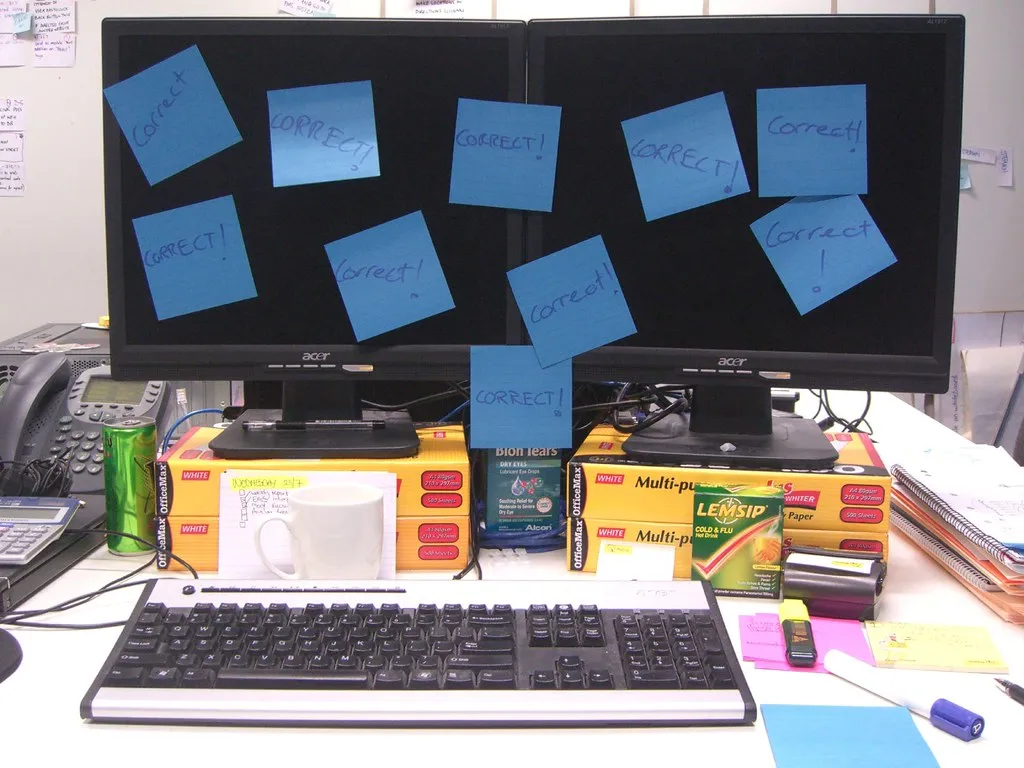
The rule only bites if the task is named before the timer starts. Named means written or said, not vaguely held in mind — “sort out the report” is a mood, “draft the summary section” is a task. One line on a sticky note next to the screen is enough. When your attention drifts mid-session, the note is the thing you come back to, and its specificity is what makes coming back easy.
Naming also does something less obvious: it makes starting cheaper. A large part of the wall between intending and beginning is not knowing what the first move actually is. A session with a name has a first move built in. You are not starting “the project”; you are starting one sentence of it.
There is a small ritual quality to this, and rituals help. Write the line, press the button, begin. In PetPomo the button also sends the cat to sleep, which turns out to be a surprisingly firm way of marking that the session has started — something else in the room has committed to the next twenty-five minutes, so you may as well too.
What “one task” means when the work is enormous
The objection arrives quickly: my work doesn’t come in twenty-five-minute pieces. A dissertation, a codebase migration, a business plan — these are months, not sessions.
The answer is to slice by question, not by hours. “Work on chapter two” is not a task, because you cannot tell when it is done. “Work out what chapter two is actually claiming” is a task. So is “list the three worst risks in the migration” or “find out why the test fails on Tuesdays”. A good session task is a question the session could plausibly answer, and you know you have sliced correctly when you could tell someone else what finished looks like.
Big work sliced this way stops being a wall and becomes a queue. You never face the dissertation; you only ever face the next question, and the next question fits in a block.
The rule is also a permission
One task per session sounds like a restriction, but most people experience it as relief. For twenty-five minutes, everything else is officially not your problem. The unanswered emails are not neglected; they are scheduled for a different block. The other project is not forgotten; it is simply not this session’s business.
Without the rule, working on anything means low-level guilt about everything else — a background scan of all the things you are not doing that runs alongside the thing you are. The named session switches the scan off. It is the difference between working on one thing and working on one thing while defending the choice.
The bell closes the loop
A single-task session has an honest ending in a way a multi-task session never does. When the bell rings, the question either got answered or it didn’t, and if it didn’t you know exactly where to pick it up — which makes the next session cheaper to start too. Closing loops is most of what a bounded session is for, and you can only close a loop you can name.
It also makes the small celebration honest. In PetPomo the cat wakes at the bell and a coin lands, and the reward means something precisely because the session was one thing, attempted properly. A coin for twenty-five minutes of diffuse busyness would just be noise.
Sessions you can count are sessions you can plan
There is a final payoff. Once a session reliably means “one named task, attempted for one interval”, sessions become a unit you can plan a day with. Hours don’t work for planning because an hour of blended attention is not comparable to an hour of focused attention. Named sessions are comparable, and a plan built from comparable units is a plan you can actually review.
None of this needs software. A kitchen timer and a sticky note enforce the rule perfectly well, and a cat that naps while you work is an accessory, not a requirement. The rule is the thing: one block, one name, and the honest little verdict of the bell.
Comments
Loading comments…
Keep reading 🐾

What your focus stats actually tell you — and what they don't
Focus time tracking stats are a mirror, not a scoreboard. Which numbers deserve your trust, which ones flatter you, and how to read a week kindly.

Why a virtual pet makes focus timers stick
Plain timers are easy to abandon because nothing notices. A pet that reacts to your sessions borrows a much older motivation, and that changes the odds.
Making the Pomodoro Technique survive an office job
The Pomodoro Technique was designed for people who control their own time. Here is how to make it survive Slack, meetings and an open-plan office.