About PetPomo

PetPomo is a free pomodoro timer where a virtual pet keeps you company while you work. Your cat sleeps through each focus session in a hand-painted world that follows your real time of day, your local weather and the season — and this page is about the project itself: what it does, the research on focus, ADHD and mental health it leans on, how it treats your data, and who builds it.
What is PetPomo?
PetPomo is a pomodoro focus timer and a virtual pet in one page. The Pomodoro Technique — 25 minutes of work, a 5-minute break, a longer break every fourth round — works because it turns an endless task into a bounded one. PetPomo adds the half the technique usually loses: a reason to actually take the break. When the bell rings, someone small and furry has been waiting for you.
There is nothing to install and no account to create. Open the page, press Start, and your pet curls up beside the countdown. It runs in any modern browser and keeps working with the internet switched off.
What PetPomo does
The timer
A pomodoro timer with configurable focus and break lengths, a countdown that also runs in the browser tab title, and an end time stored as an absolute moment — so it stays accurate through page refreshes, backgrounded tabs and a laptop lid closed mid-session. Focused minutes earn coins; abandoned sessions are simply not counted.
The pet
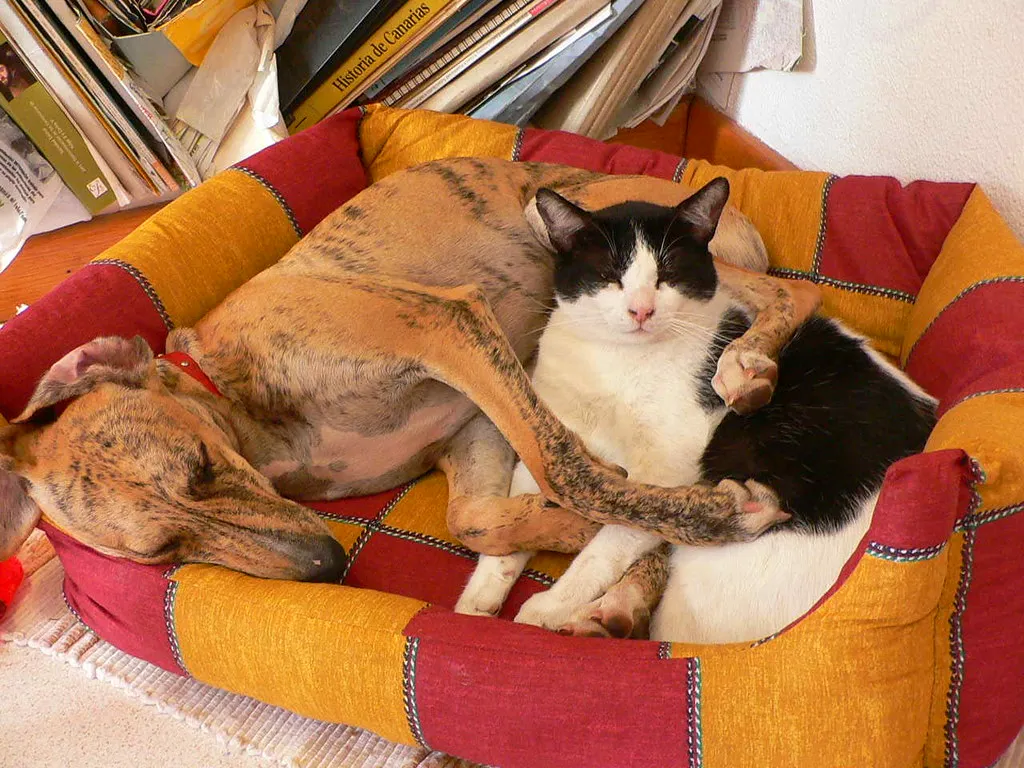
Your pet has a mood you can read at a glance, and that mood is the sum of how you have treated it, not a random number. It sleeps while you focus, wakes and celebrates when the bell rings, gets hungry between sessions, purrs when stroked and plays when poked. Skip your breaks and it notices. Coins buy new animals, snacks, scenes and themes in the shop.
The world
The scenes are painted, not photographed, and never quite the same twice. The world runs on your device's clock, so dawn is dawn where you are; it reads your local weather and paints it — cloud, fog, rain you can hear, snow, storms with distant lightning; and it follows the season the right way round for your hemisphere. Every sound is synthesised in the browser, so nothing is downloaded and nothing plays until you allow it.
Pomodoro, ADHD and mental health: the research PetPomo leans on
PetPomo is a timer, not a treatment — but its design choices are not arbitrary. The bounded interval, the enforced break, the visible countdown and the small creature are each borrowed from findings that have held up:
| Finding | Key numbers | Source |
|---|---|---|
| Brief breaks keep attention from decaying over long tasks | Performance held steady across 50 minutes only with two short breaks | Ariga & Lleras, Cognition (2011) |
| Time perception measurably differs in ADHD, which is why external timers help | Consistent deficits in estimating and reproducing durations | Ptacek et al., Medical Science Monitor (2019) |
| ADHD is common — in children and in adults | ~7.2% of children; ~2.5% of adults | Thomas et al., Pediatrics (2015); Simon et al., Br J Psychiatry (2009) |
| Interacting with animals lowers stress markers | Review of 69 studies: reduced cortisol, blood pressure and heart rate | Beetz et al., Frontiers in Psychology (2012) |
| Loneliness is a genuine health risk, not a mood | Meta-analysis of 70 studies: ~26% higher mortality risk | Holt-Lunstad et al., Perspect Psychol Sci (2015) |
| Habits take months, not a fortnight — so returning must stay cheap | Median 66 days to automaticity; a single missed day did no harm | Lally et al., Eur J Soc Psychol (2010) |
The blog goes deeper on each thread: whether the Pomodoro Technique works for ADHD, time blindness and how to make time visible, why a virtual pet makes focus timers stick, and an honest look at virtual pets and loneliness. The honest caveats live there too — the animal studies used real animals, and nothing here is medical advice.
Who PetPomo is for
PetPomo sits in a particular corner of productivity software: it is a cosy focus tool, not a dashboard. If a spreadsheet of your own output motivates you, there are excellent apps for that. PetPomo is for the people it quietly leaves behind:
- Students who want an aesthetic study timer they can leave open beside their notes — something that makes a two-hour library session feel kept-company rather than surveilled.
- Remote workers whose day has no natural edges, and who need the break bell more than the focus bell — the isolation nobody schedules for is real, and ambient presence is part of the answer.
- People with ADHD who work better against an external clock than against their own sense of time. A visible countdown gives a task an edge and a finish that arrives regardless — though PetPomo is a timer, not a treatment, and nothing here is medical advice.
- Anyone minding their mental health at work — who wants the day to alternate between honest effort and honest rest, without a tool that shames the thin weeks. The cat gets sad; it never dies, and nothing is ever destroyed.
- Anyone who abandons habit apps, because a streak counter never noticed they were gone. A pet does. That is the whole design bet: a habit accumulates more easily in a relationship than in a number.
Your data, privacy and security
Everything lives in your browser's local storage. There is no account, no tracking pixel, no analytics script, and nothing is uploaded. Cloud sync is opt-in: turn it on in Settings and your save is stored under a random code that only your browser holds, so the server keeps a save without ever learning whose it is.
The weather feature never asks for your location. It uses the approximate area our host already attaches to every web request, rounded to about eleven kilometres before use — and the site's security policy denies itself the geolocation permission outright, so that is a guarantee the browser enforces rather than a promise.
The same posture runs through the whole site: a strict Content-Security-Policy so only the site's own code can run, no third-party scripts or fonts, HTTPS enforced with two-year HSTS, and the page refuses to be embedded in other sites' frames. The details are in the privacy policy.
How PetPomo is built
Astro renders every page to static HTML, Preact runs the game, GSAP animates it, Tailwind styles it, and Cloudflare Pages serves it. The animals and scenes are hand-authored SVG, inlined into the bundle so the whole game works offline after the first load. Every sound effect — the bell, the rain, the purr, the meow — is synthesised with the Web Audio API in your browser; no audio files are shipped at all.
More on the thinking behind it, and on the technique itself, on the blog.
Accessibility
Reduced motion is honoured automatically from your OS setting and can be forced on in Settings — it disables parallax, particles and every looping animation while keeping each pose readable. Audio starts muted and never plays without consent. All controls are keyboard reachable, and the page works as plain readable text before any script runs.
Who makes PetPomo
PetPomo is a solo project. I'm Dishant Totade, a software developer, and I build, draw and maintain all of it — the timer, the animals, the scenes and the synthesised sounds. It exists because I wanted a focus timer that felt like a place rather than a stopwatch, and because the break is the half of the Pomodoro Technique everyone skips, including me.
The best way to reach me about PetPomo — a bug, an idea, an animal you wish existed — is the contact page.
Questions about the project
- Who made PetPomo?
- One person — Dishant Totade, a software developer. There is no company and no team behind it.
- Does PetPomo help with ADHD?
- Many people with ADHD find a visible pomodoro countdown genuinely useful — time perception differences in ADHD are well documented, and an external timer supplies the structure an internal clock does not. The honest, mixed answer is in the full article. PetPomo is a timer, not a treatment, and nothing on this site is medical advice.
- How is PetPomo funded?
- It is a personal project that costs very little to run. There is nothing to buy: coins are earned by focusing and can only be spent inside the game.
- Does PetPomo collect or sell my data?
- No. Your progress lives in your own browser, sync is opt-in and pseudonymous, and nothing is sold or shared with anyone. The privacy policy is short because there is little to disclose.
- How do I report a bug or suggest a feature?
- Through the contact page. Reports that mention your browser and what you were doing when it happened get fixed fastest.
Ready to try it? Start a focus session — your pet is already waiting.