Working from home and the isolation nobody schedules for
· 5 min read
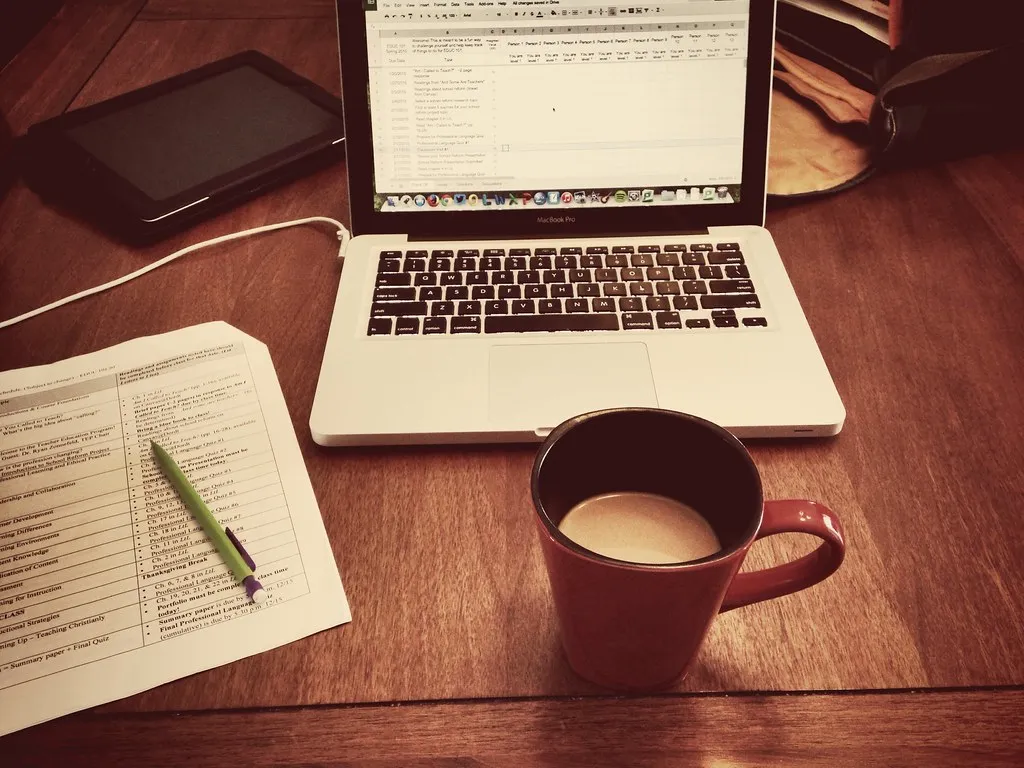
The isolation of working from home is nobody’s fault and nobody’s job, which is exactly why it persists. Offices supplied company as a by-product — the kettle queue, the overheard joke, the person who wanders past and says lunch? — and when remote work removed the office, all of that went with it, unlisted and unreplaced, because it had never appeared on any plan in the first place.
The office was a social machine nobody designed
Almost none of the company an office provided was deliberate. Nobody scheduled the three minutes by the kettle, the eye-roll shared across a meeting table, the low murmur of other people typing. It accumulated by accident, out of the simple fact of shared rooms.
And because it was accidental, it was invisible. It never showed up in a job description or a calendar, so when the office disappeared, there was no line item to notice going missing. People audited their new remote lives and found the meetings intact, the deadlines intact, the work intact — and could not name what had gone.
What had gone was the connective tissue. The work survived; the company around the work did not.
Nothing replaced it, because nothing was asked to
Here is the structural problem: accidental company cannot be reinstated by accident. At home there is no kettle queue, because there is no queue. There is nobody to overhear. The conditions that produced casual contact simply do not exist in a spare bedroom, and no amount of waiting will regenerate them.
So the replacement has to be deliberate, and this is where most people stall — because scheduling company feels faintly embarrassing, like scheduling laughter. It shouldn’t. The office scheduled your company for years; you just never saw the machinery. Doing it yourself is not needier than what came before. It is the same provision, moved in-house.
Left unreplaced, the quiet compounds. Days blur, edges dissolve, and the silence starts taxing the very concentration the arrangement was supposed to protect.
Video calls are meetings, not company
The obvious objection: but I’m on calls all day. True, and it does not help, because calls are the formal part of work — the part that always survived. A meeting has an agenda, an audience and a performance. The kettle queue had none of those things, which is precisely what made it restful.
Company, in the sense that matters here, is presence without demand. Someone in the room who wants nothing from you. A meeting is close to the opposite: everyone wants something, and you are on display throughout. Eight calls a day can leave you both overexposed and lonely, which sounds contradictory and is a fairly ordinary remote-work Tuesday.
Deliberate rituals put edges back on the day
The first practical replacement is ritual. Offices marked your edges for you — the commute, the coat on the chair, the lights going off floor by floor. At home, nothing marks anything unless you do it yourself.
Small, repeated rituals carry more weight than their size suggests: the same mug at the same hour, a walk that stands in for the commute, a fixed sequence that means work has begun and another that means work is over. A day built around its breaks rather than its hours gives you several of these edges for free, because every break is a small boundary with a before and an after.
The end of the day deserves particular attention, because it is the edge that decays first. In an office, leaving was a physical act witnessed by other people; at home, work just thins out into the evening until neither is really happening. A deliberate shutdown — the list written for tomorrow, the laptop actually closed, the lamp off — is a ritual worth defending as fiercely as any meeting.
Rituals do not supply other people. What they supply is the structure other people used to supply, which turns out to be a surprising fraction of what you were missing.
Ambient presence is the other half
The second replacement is quieter: something else alive in the room, or close enough to it. People discover this by instinct — the radio on for the voices rather than the music, working in a café for the hum, a real cat asleep on the printer.
A desk companion is the same instinct, made small and undemanding. In PetPomo, a cat sleeps beside the timer while you focus and wakes for the breaks, wanting feeding or a moment’s play; the scene behind it follows the real weather and the time of day, so the room on the screen keeps loose time with the room you are in. None of this is conversation, and it is not pretending to be. It is ambient presence — the digital equivalent of someone typing quietly two desks away — and for the long unpeopled stretch between breakfast and lunch, many people find that it is enough to make the work feel accompanied rather than abandoned.
The honest framing is this: a pomodoro rhythm with a small creature attached replaces the texture of the office, not the people. The people still need their own arrangements — the standing call with a friend, the co-working afternoon, the lunch that actually happens.
How big the gap really is
The missing kettle queue sounds trivial until you put numbers on what its absence does:
| Finding | Key numbers | Source |
|---|---|---|
| Loneliness is a persistent top struggle of remote work | Around a quarter of remote workers name loneliness as their biggest difficulty, year after year | Buffer, State of Remote Work |
| Loneliness is a health risk on the scale of the famous ones | Meta-analysis of 70 studies: ~26% higher mortality risk with loneliness, ~29% with social isolation | Holt-Lunstad et al., Perspectives on Psychological Science (2015) |
| Time with animals measurably lowers stress markers | Review of 69 studies: reduced cortisol, blood pressure and heart rate during and after animal contact | Beetz et al., Frontiers in Psychology (2012) |
The third row is the modest scientific basis for the “ambient presence” section above — with the honest footnote that the studies were done with real animals, and a pixel cat borrows the mechanism rather than replicating it.
Schedule the unscheduled
The isolation of remote work persists because it sits in the gap between everyone’s responsibilities: employers replaced the meetings, you replaced the desk, and nobody replaced the kettle queue. The fix is unglamorous — notice that the company was always manufactured, and start manufacturing it on purpose. Rituals for edges, ambient presence for texture, real humans on a schedule for the rest.
PetPomo is a timer, not a treatment. Nothing here is medical advice — if isolation or low mood are weighing on you, a doctor or a specialist is the right person to talk to, and this page is no substitute.
Comments
Loading comments…
Keep reading 🐾
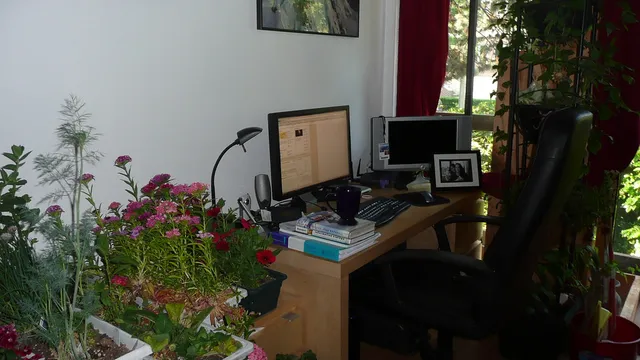
A work-from-home routine built around breaks, not hours
A work from home routine that treats breaks as the skeleton of the day — real edges, breaks that actually restore, and an ending you choose.
Why looking after something helps when you feel alone
Caring for something — even a small virtual pet — can ease the feeling of being surplus when you are alone. How that works, and where the help runs out.
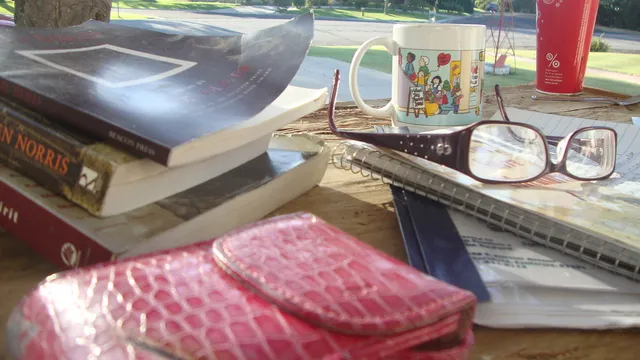
Small rituals that make solitary work feel kept company
The same mug, the same start sequence, a small creature fed at the bell: how repeated work rituals give solitary days edges and a quiet sense of company.