Small rituals that make solitary work feel kept company
· 4 min read
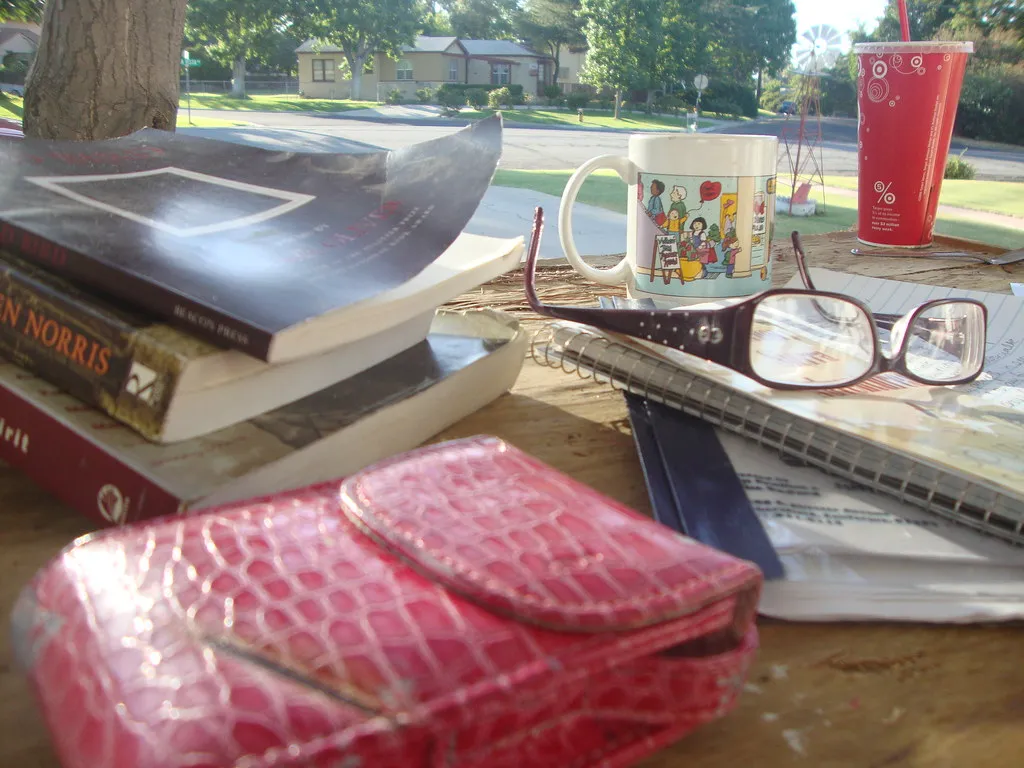
A ritual is a small, repeated act that marks an edge — the same mug filled before the first task, the same chair angled the same way, the same button pressed to begin. Done once, it is nothing. Done every working day, it starts to behave like company, because it gives the day a shape that somebody seems to be keeping. Even when the somebody is you.
Offices were full of rituals nobody called rituals
Nobody who worked in an office thought of the kettle queue as ceremony. But it was. Ten o’clock came, someone stood up, someone else followed, and for five minutes the day had a hinge in it. The same went for the lift small talk, the sandwich at the usual bench, the colleague who sighed at the same meeting every week. None of it was work, and all of it was structure.
The useful thing about these rituals was that other people kept them for you. You did not have to remember that it was time to stop; the kettle crowd remembered on your behalf. The day’s edges were maintained communally, like a footpath that stays a footpath because everyone keeps walking it.
Then a lot of us moved home, and the footpath grassed over. The work came along fine. The ceremony did not, and its absence is a large part of the isolation nobody schedules for — not the missing meetings, but the missing kettle.
A ritual is an edge, not a superstition
It is worth being clear about what a ritual actually does, because the word carries a whiff of incense and nonsense. A working ritual is just an edge you can feel. The commute was one: however grim the train, it drew a line with home on one side and work on the other, and your head crossed the line with your body.
A day without edges does not become free. It becomes liquid. Work seeps into breakfast, breaks blur into scrolling, and the evening never quite announces itself — which is why a work-from-home routine built around breaks matters more at a kitchen table than it ever did at a desk someone else owned.
Rituals redraw the lines. The mug says starting. The closed laptop, carried to another room, says finished. These are signals sent from you to you, and they work for the same reason a written note works better than a mental one: once a thing exists outside your head, your head stops having to hold it.
What a good start ritual looks like
The start is the edge most worth building, because starting is the moment solitary work feels most solitary. Nobody is settling in around you. The silence has to be broken by you alone.
A good start ritual is small, physical, always identical, and ends with the work actually beginning. Fill the mug. Write the one task on paper. Press start. The identical part matters most — the whole point is that you stop deciding. A ritual you have to think about is just another task.
This is one place a companion earns its keep. In PetPomo, pressing start sends the cat to sleep — every time, without variation. The ritual has a second participant: you begin, it curls up, and the settling-in feeling that an office room full of people used to provide is performed, in miniature, by one small animal. It is a modest effect. It is also surprisingly hard to give up once you have it.
The bell is a ritual too — and this one has a witness
Ends need marking as much as beginnings, and this is where solitary rituals usually fall apart. Alone, there is nothing to stop for. The break you meant to take at eleven dissolves, because breaks kept only by willpower are kept by nobody.
A ritual with a witness holds better. When the bell goes and the cat wakes up wanting feeding, the break has content and a claimant. You are not vaguely pausing — you are doing the small ceremony of looking after something, and the something notices whether you did. Why looking after a creature helps when you spend your days alone is a bigger subject, but the short version is: a kept appointment feels different from a lapsed intention, even when the other party weighs nothing and lives in a browser tab.
Many people find the same effect with entirely analogue witnesses — a real cat, a plant watered at noon, a neighbour waved at daily. The mechanism does not care how the witness is implemented. It cares that the ritual is shared.
Repetition is comfort, not a rut
There is a suspicion worth answering: that doing the same small things every day is how a life goes stale. But a rut and a rhythm are not the same thing. A rut is repetition you resent, in service of nothing. A rhythm is repetition you chose, holding a shape you wanted.
The sameness is what makes it work. A ritual that varies demands attention; a ritual that never varies releases it. The mug, the note, the sleeping cat — because they are always the same, they cost nothing to perform, and the attention they save is spent on the work and on noticing that the day, for all its solitude, has a keeper.
Start smaller than feels worthwhile. One edge — a real beginning or a real end, marked the same way every day for a week. If the day feels slightly more inhabited by Friday, add a second. If you want a witness who always turns up, the timer with the cat is one; the kettle and the notebook were doing the job long before it existed.
PetPomo is a timer, not a treatment. Nothing here is medical advice — if loneliness or the weight of working alone is pressing on you, a doctor or a specialist is the right person to talk to, and this page is no substitute.
Comments
Loading comments…
Keep reading 🐾

Working from home and the isolation nobody schedules for
Offices supplied company nobody planned — kettle queues, overheard jokes. Working from home removed it without replacing it. What to put back, and how.
A work-from-home routine built around breaks, not hours
A work from home routine that treats breaks as the skeleton of the day — real edges, breaks that actually restore, and an ending you choose.
Why looking after something helps when you feel alone
Caring for something — even a small virtual pet — can ease the feeling of being surplus when you are alone. How that works, and where the help runs out.