A work-from-home routine built around breaks, not hours
· 5 min read
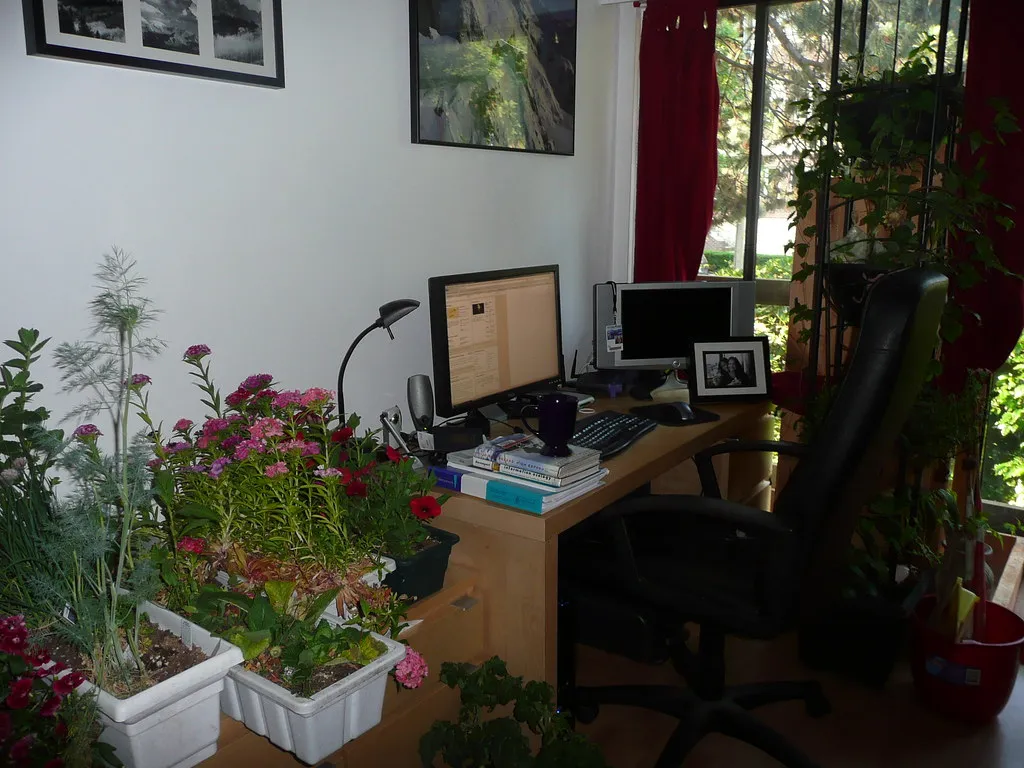
The most workable work-from-home routine is built around when you stop, not how many hours you sit. Hours are how offices measure presence; at home nobody is measuring, and the day holds together far better when its skeleton is a set of deliberate breaks with work stretched between them.
That sounds backwards until you notice what actually disappeared when you stopped commuting. It was not the desk, and it was not the colleagues exactly. It was the edges.
The office gave your day a shape, and you never noticed
A commute is a terrible way to spend an hour, but it does one thing perfectly: it separates work from not-work with a physical journey. You could not accidentally still be at your desk at nine in the evening, because your desk was somewhere else.
Inside the office, more edges were being drawn for you all day. The kettle queue was a break you did not schedule. Lunch happened because other people stood up. The day ended because the room emptied and staying felt strange. None of this was designed — it was ambient structure, and it left when you did.
The missing company gets written about a great deal. The missing edges get less attention, and they may matter just as much, because a day without edges does not become more productive. It becomes a single grey smear in which you are somehow always working and never quite working.
Why breaks make a better skeleton than hours
The obvious fix is to impose office hours on yourself — nine to five-thirty, at the desk. Many people try it, and it tends to dissolve within a week, because hours are passive. Nothing happens at the boundary of an hour. There is no event, so there is nothing to keep.
A break is an event. It has a beginning, a content and an end, and events are what days are actually made of. If you plan the stops — mid-morning, lunch, mid-afternoon, finish — the work arranges itself into the gaps without much further management. You stop asking “have I done enough hours?” (unanswerable, and the answer always feels like no) and start asking “did I work the stretches between the breaks?” — which has a plain yes or no.
This is the pomodoro idea scaled up to a whole day: the rest is not the opposite of the structure, the rest is the structure.
A break and a drift are not the same thing
Here is where home working quietly goes wrong. What most people call a break is actually a drift: the hand reaches for the phone, the scroll begins, and twenty minutes later you surface feeling worse than when you stopped. A drift has no edges — that is precisely what makes it restful-looking and restless-feeling — and it does not end so much as get interrupted by guilt.
A real break has content. Stand up. Fill the kettle. Look out of a window at something further away than a screen. The content matters because it gives the break a natural end: the tea is made, the stretch is done, you sit back down. Skipping breaks entirely is the other failure mode, and it costs more than it saves — the case against it is worth reading on its own, because a skipped break is really a loan taken out against the next work stretch.
This is the reason PetPomo puts the pet’s whole social life inside the break. The cat sleeps while you focus and wants feeding, stroking or a game when the bell rings — which means the break has a small job in it, and a job with an end is much harder to drift through than an open scroll.
What this looks like across an actual day
Start with a ritual rather than a resolution. The same mug, the same seat, the first timer started — a short fixed sequence that tells your head the day has begun, the way the commute used to. Small rituals carry more of solitary work than they appear to, and the start of the day is where they earn the most.
Then work in stretches you can actually finish, with a short break at the end of each and a proper long one at lunch — away from the desk, ideally away from the room. If you use a timer with a pet attached, the rhythm mostly runs itself: focus until the bell, spend the break on the cat and the kettle, sit back down. The pet does not know it is enforcing a routine. That is rather the point.
Keep the afternoon honest by planning fewer stretches than you think fit. A home day holds less deep work than the empty calendar suggests, and a plan with slack in it survives contact with reality; a packed one collapses by three o’clock and takes your mood with it.
End the day on purpose
The nastiest failure of home working is not laziness. It is the day that never ends — the laptop still open at nine, not because you are working but because you never decided to stop, and half-working all evening is a remarkably efficient way to get neither work nor rest.
So decide the last bell in advance. When it rings, write two lines about where tomorrow starts, close the laptop, and physically leave the desk, even if you only walk to the kitchen. The note is what lets you stop — an open task with a known next step will wait quietly overnight; an open task without one nags all evening.
PetPomo’s scenes shift with the real time of day, so by the last session the room on screen has gone to dusk. It is a small thing, but a small thing that says the day is ending is exactly what the home office lacks.
None of this needs to be got right first time. Build the edges, defend the breaks, end on purpose, and let the hours look after themselves — they were never the point.
PetPomo is a timer, not a treatment. Nothing here is medical advice — if the isolation of working from home is weighing on you, a doctor or a specialist is the right person to talk to, and this page is no substitute.
Comments
Loading comments…
Keep reading 🐾

Five-minute office fun: quick resets between meetings
Short, specific ways to spend the five minutes between meetings so they actually recover your attention, backed by what the break research says works.
Working from home and the isolation nobody schedules for
Offices supplied company nobody planned — kettle queues, overheard jokes. Working from home removed it without replacing it. What to put back, and how.
What your focus stats actually tell you — and what they don't
Focus time tracking stats are a mirror, not a scoreboard. Which numbers deserve your trust, which ones flatter you, and how to read a week kindly.