Body doubling without video-call anxiety
· 2 min read
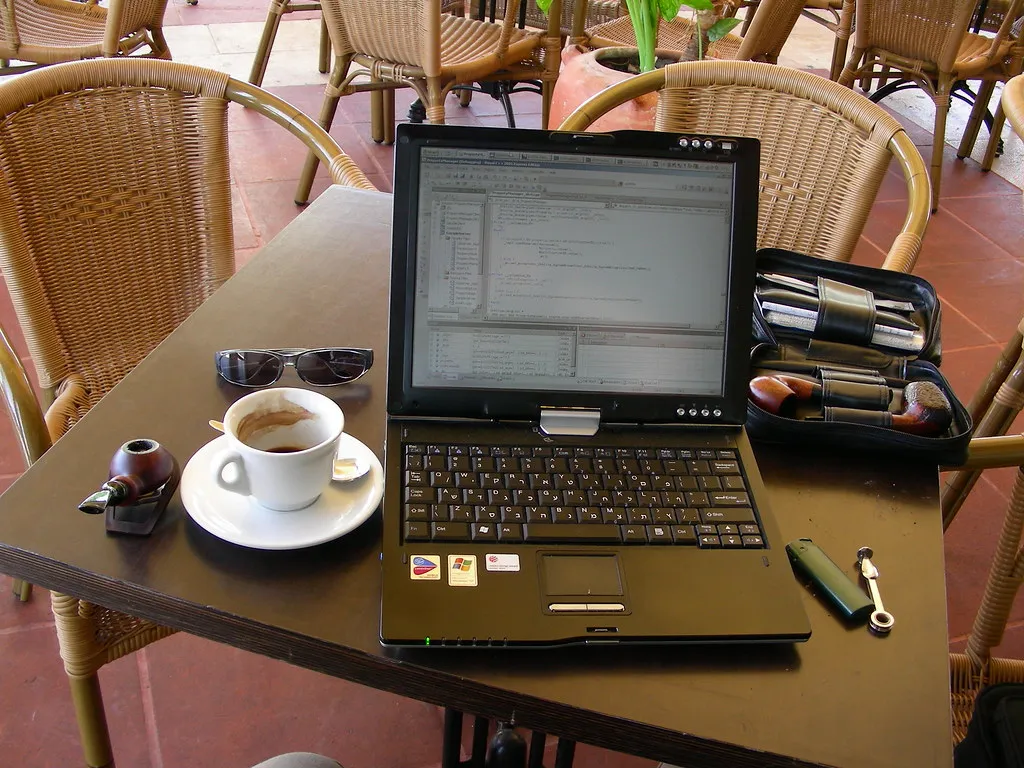
Every well-known body doubling tool — Focusmate, Flow Club, Caveday — solves the same problem the same way: put another person’s live video feed next to your work, and their presence keeps you on task. For a lot of people that works. For some people, the requirement to be on camera, presentable, watched, is itself the thing standing between them and starting.
What body doubling is actually doing
Body doubling works, where it works, through a genuinely old and well-established idea: social facilitation. The finding — first documented by Norman Triplett in one of psychology’s earliest experiments, back in 1898 — is that people often perform simple or well-practiced tasks better in the mere presence of others, even without any interaction happening at all. No coaching, no accountability check-in required. Presence alone does some of the work.
It’s worth being honest about the evidence here too: no one has run a proper controlled trial specifically on body doubling for ADHD. What’s well established is the older social facilitation research it draws on; the leap to “and this specifically helps ADHD focus” is a reasonable, widely reported inference from lived experience, not a settled clinical finding.
Why the camera is the actual sticking point for some people
If presence alone is doing the work, a live video feed is one implementation of presence, not the only possible one — and it’s an implementation that adds its own cost. Being watched changes behavior beyond just “on task,” and for someone with social anxiety, RSD, or simply a home that isn’t camera-ready at 9am, the setup cost of finding a body-doubling session can outweigh the benefit before the work has even started.
| Requirement | Focusmate / Flow Club style | Ambient / no-camera style |
|---|---|---|
| A scheduled time slot | Yes | No |
| Being visibly on camera | Yes | No |
| A real human’s presence | Yes, live | No — a companion mechanic instead |
| Setup friction before starting | Booking, camera check, small talk | None |
An ambient version of the same mechanism
A virtual companion doesn’t replicate a human’s presence — it isn’t trying to. What it offers is a lighter-weight version of the same underlying signal: something else is here, paying attention to whether you’re working, with none of the scheduling or camera requirement attached. Body doubling with a virtual pet is built around exactly this trade — less social proof than a real human, but available in zero seconds, with zero camera, whenever the alternative would otherwise be working entirely alone.
Neither version is strictly better. If live accountability with a real person genuinely works for you, that’s a stronger form of the same effect than any app can offer. But if the camera has been the reason you never actually book the session, an ambient companion removes the one part of the setup that was stopping you before the work began.
PetPomo is a timer, not a treatment. Nothing here is medical advice — if social anxiety or focus problems are weighing on you, a doctor or a specialist is the right person to talk to, and this page is no substitute.
Comments
Loading comments…
Keep reading 🐾
Body doubling, and why even a virtual pet counts as company
What body doubling is, why presence without help works for ADHD focus, and why even a virtual pet asleep beside your timer counts as company.

Small rewards, right now: motivation that works with ADHD
Why small, immediate rewards suit ADHD motivation better than distant payoffs — and where honest gamification ends and manipulation begins.
Company without judgement: presence that asks nothing
Why company that cannot judge you is sometimes easier than company that can, and what a silent, undemanding presence actually does for solitary work.