Body doubling, and why even a virtual pet counts as company
· 4 min read
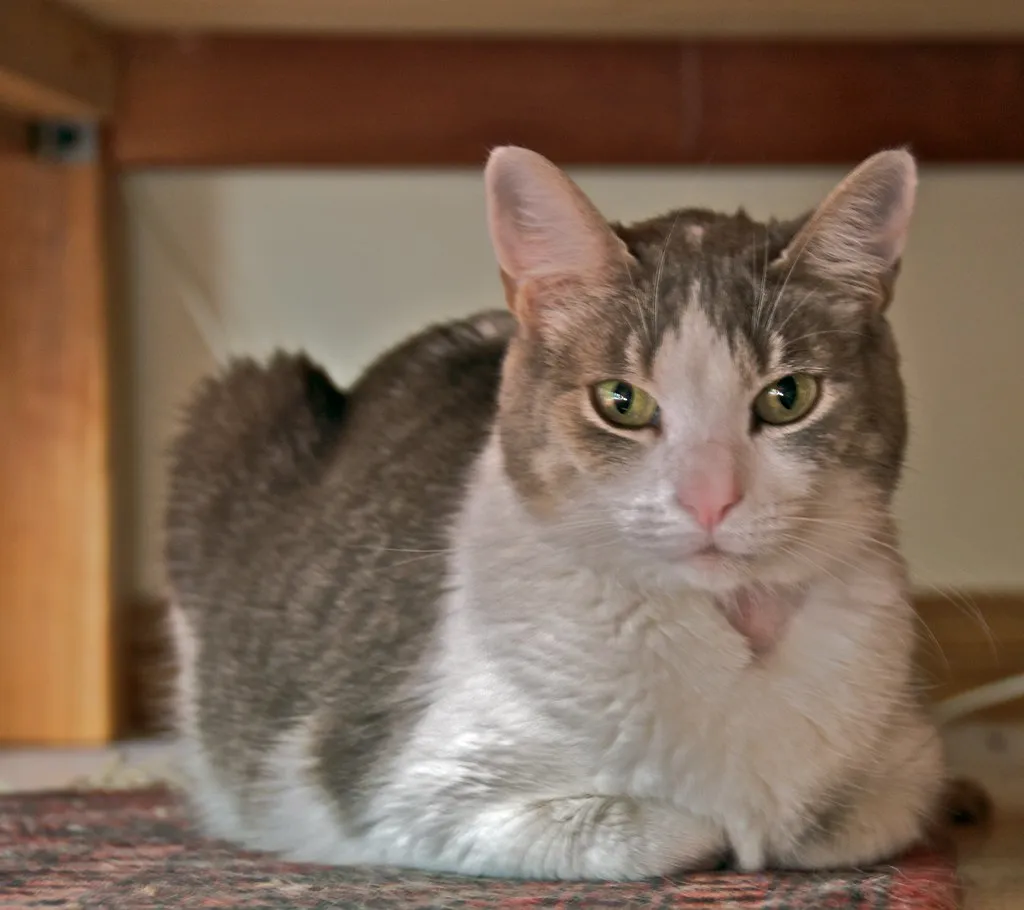
Body doubling is getting work done in the presence of someone who is not helping. They sit nearby, doing their own thing — reading, typing, folding laundry — and somehow the task you could not start alone gets started. It sounds like it shouldn’t work, and it reliably does; enough people with ADHD swear by it that whole routines, friendships and online communities have been built on nothing more than being quietly in the same room.
The help is that they don’t help
The strangest thing about body doubling is what the other person contributes: nothing. They don’t check your work, don’t keep you on task, often don’t even know what you’re doing. If they started supervising, the effect would curdle — supervision adds pressure, and pressure is rarely what a stalled start needs.
What their presence supplies instead seems to be two quieter things.
The first is a witness. Work done in front of someone is slightly more real than work done alone. Getting up to wander the kitchen mid-sentence feels different with another person in the room — not because they would say anything, but because you would notice yourself doing it. The watcher doesn’t need to watch; it is enough that they could.
The second is borrowed structure. A person working nearby radiates a low signal — this is a time and place where work is happening — and it turns out that signal can be picked up second-hand. Their session gives your session a shape. If your own executive machinery is unreliable, sitting inside someone else’s running copy is a very cheap patch.
Neither mechanism requires conversation. Both are wrecked by it, in fact. The whole arrangement runs on parallel silence, which is its own odd, comfortable kind of company — presence that asks nothing of you.
The company doesn’t have to be in the room
Once you notice what body doubling actually supplies — a witness and a running rhythm, no interaction required — you can spot people sourcing it from further and further away.
A friend on a video call, both of you muted, working. A library, where the whole room is a body double. And at the far end, the genuinely strange and genuinely popular practice of studying alongside strangers on video — hours of footage of someone silently writing at a desk, watched by thousands of people who are also silently writing at desks. Nobody in that arrangement has ever met. It still works, for many people, because the mechanism never needed acquaintance. It needed presence with a pulse of work in it.
Each step down this ladder trades away warmth and trades in convenience. The friend knows you; the stream doesn’t; but the stream is available at 6 a.m. and never cancels.
Where a sleeping cat enters the argument
Keep descending the ladder and you arrive somewhere unexpected: a small animated cat, asleep next to a countdown.
In PetPomo, starting a focus session sends the cat to sleep beside the timer, and it stays there — breathing, curled, minding its own business — until the bell. As body doubles go it is the minimal case: it cannot talk, cannot judge, cannot help. But look at what survives the reduction. There is a presence at the edge of your vision. It arrived when the work started, so it carries the session’s shape. And abandoning the session means something in the room changes — the nap you both agreed to is broken. A witness, a rhythm, a mild cost to walking off. The mechanism is intact; only the biography is missing.
There are honest advantages to company this small. It costs nothing socially — no scheduling, no self-consciousness, no one to cancel on, no performance of looking busy. Human body doubles are wonderful and scarce; a cat that materialises at the press of a button is neither wonderful nor scarce, and at four in the afternoon on a stuck day, available beats wonderful. The case for why a creature on the screen holds a habit better than a bare number is its own argument, but the short version is that people are wired to notice living things, even schematic ones, in a way they are not wired to notice countdowns.
What the smaller doubles can’t do
Fairness requires the other column. A virtual pet will not text you “are we still on for 9?” — the accountability of an arrangement with a human, the kind you’d feel bad breaking, has no miniature equivalent. It won’t celebrate your promotion or notice you’re having a rough week. And for some people the witness effect simply requires a witness with eyes; a drawn cat reads as decoration, and decoration doesn’t hold anyone to anything.
That is fine. The ladder isn’t a ranking with a correct answer; it is a menu, and most people who use body doubling mix tiers — a co-working call for the dreaded weekly admin, the library for deep reading, the cat for the ordinary Tuesday afternoons that make up most of a life. The scarce, warm company gets saved for where it counts, and the cheap, always-on kind covers the rest.
If working alone consistently fails you and working alongside almost anything works, that isn’t a flaw to fix. It is information about how you run, and it is far easier to supply company than to argue with.
PetPomo is a timer, not a treatment. Nothing here is medical advice — if focus problems are weighing on you, a doctor or a specialist is the right person to talk to, and this page is no substitute.
Comments
Loading comments…
Keep reading 🐾
Body doubling without video-call anxiety
Every popular body doubling tool assumes you're comfortable on camera. What to do when the camera itself is the barrier, not the working alone.

Small rewards, right now: motivation that works with ADHD
Why small, immediate rewards suit ADHD motivation better than distant payoffs — and where honest gamification ends and manipulation begins.
Company without judgement: presence that asks nothing
Why company that cannot judge you is sometimes easier than company that can, and what a silent, undemanding presence actually does for solitary work.